To Rescue a Robot
I’ve been washing dishes
Singing from the bottom
— Jack Johnson
In this short series I will be writing about a project that is by no means an engineering marvel but that is nonetheless dear to my heart. It’s the tale of saving one of my most valued household appliances after it suffered a severe brain failure. It’s a story of magic smoke, recycled parts and software that took forever to complete. It is also a story about the love for a simple machine, about perseverance and about doing the dishes by hand for over five years straight.
This is the story of my dishwasher.
A Jammed Brain
The introduction may have been somewhat too dramatic… Anyway, several years ago my dishwasher broke down. It did so with a bang and I’m quite sure there was magic smoke involved. I can’t be certain, though; the event tripped the RCD and the lights went out.
It turned out the net filter had exploded, shorting a live wire to the metal frame that was, thankfully, grounded. I’m no expert when it comes to net filters, but I doubt this was the root cause of the problem. It became clear later on that the mechanical timer that controls the machine got jammed somehow, which kept the pump running abnormally long.
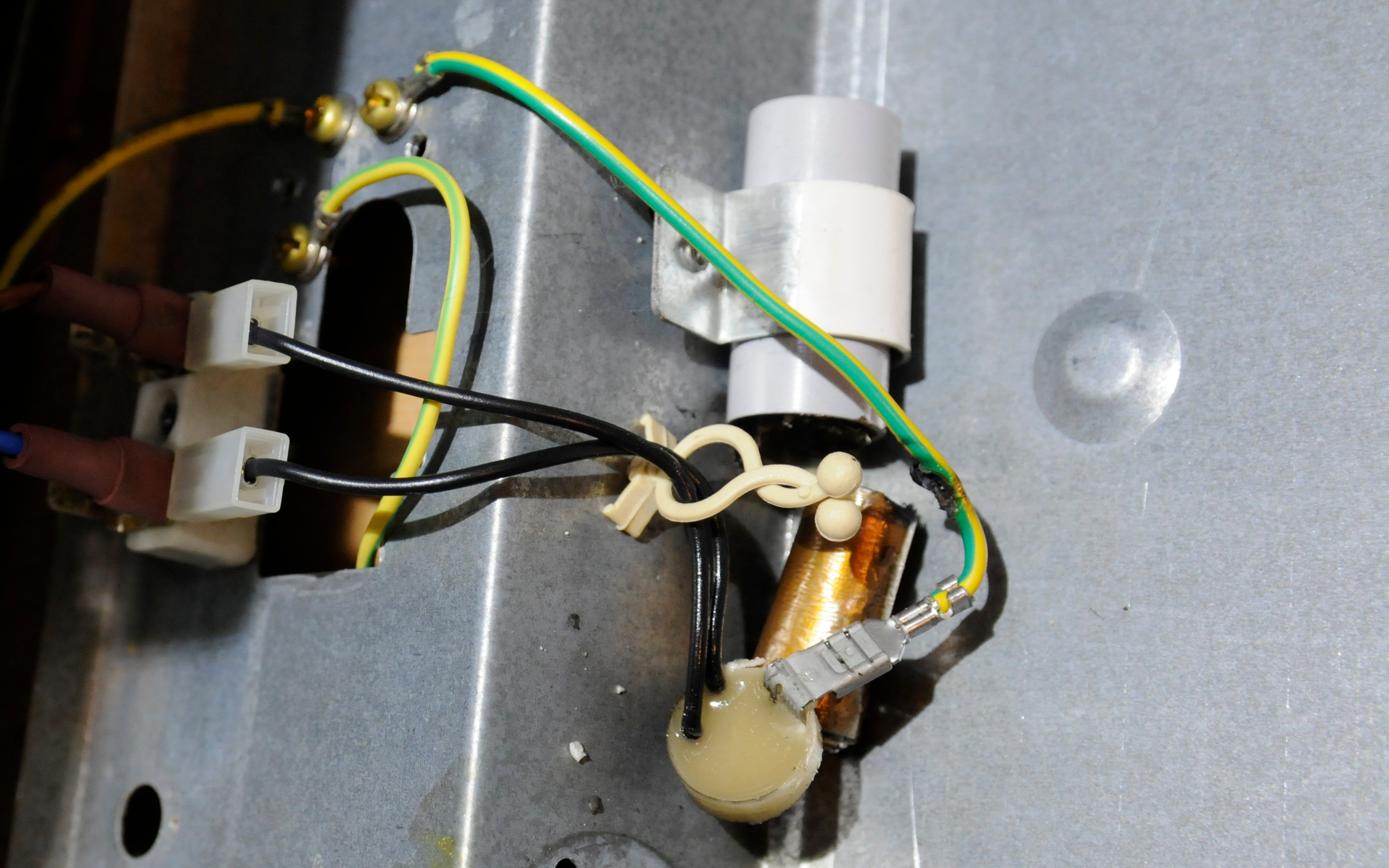 In case you wondered what’s inside
You may have done a double take upon reading about an appliance having a mechanical timer because those are not exactly common these days. Admittedly, I’m old enough to remember mechanical timers to be a thing to control household appliances, but only just. It goes without saying that machines currently in use that still have these devices are either very old or not designed according to any recent engineering standard. I suspect the latter applies to my dishwasher.
Not So High Tech
The dishwasher is - as you might have guessed - the cheapest of cheap models. It’s an HEDW44004 from a rather obscure brand called Home Electronics. The same model appears to have been sold under other equally obscure brand names. I did, rather surprisingly, come across a YouTube video of guy reviewing the thing, but I was unable to find it back when I wrote this.
Modern dishwashers are often great engineering feats and come with all sorts of features. Self-regenerating water softeners, ‘intelligent’ programs, auto-dose detergent dispensers that sniff the water and dose just the right amount, turn-on timers, projection displays, even Wi-Fi connectivity and pointless mobile apps. (If you’re into dishwasher technology you might want to check out the video1 by Technology Connections at YouTube that’s linked below).
The HEDW44004 has none of all the fanciness listed above and is really just the bare minimum to get the dish washing job done. Here’s what’s inside:
- A pump.
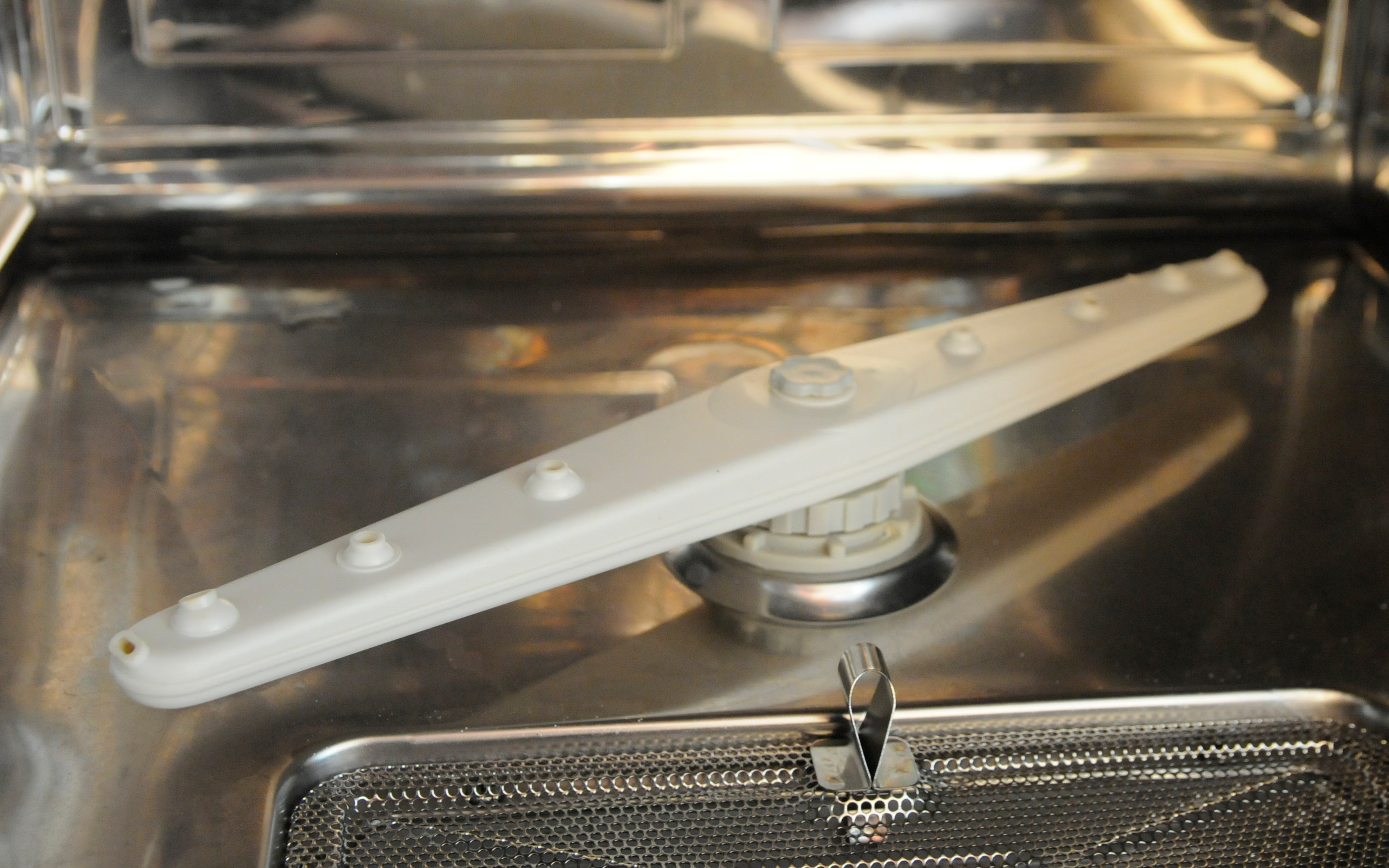
- A spray arm.
- A heater element (with thermal protection).
- A temperature switch.
- A valve for the water inlet.
- A float switch.
- A valve for the rinse aid tank.
It also comes with an eco button but all that really does is disable the heater element. Never having read the manual, I thought I could get clean dishes with less energy and live happily ever after. I was in for a rude awakening when my dear appliance flooded the kitchen floor one morning. It turned out that the float switch got jammed due to several months of accumulated food residue. Cold water isn’t very efficacious at getting rid of fatty residues. I had to open up the float switch to unstick and then clean it. It wasn’t pretty.
In some parts of the world it is common to connect your washing appliances to a hot water tap. That’s what the eco mode is for on the HEDW44004. What exactly makes it more eco friendly to just use another heat source (natural gas, probably) beats me. I think marketing people understand the meaning of the word better than I do.
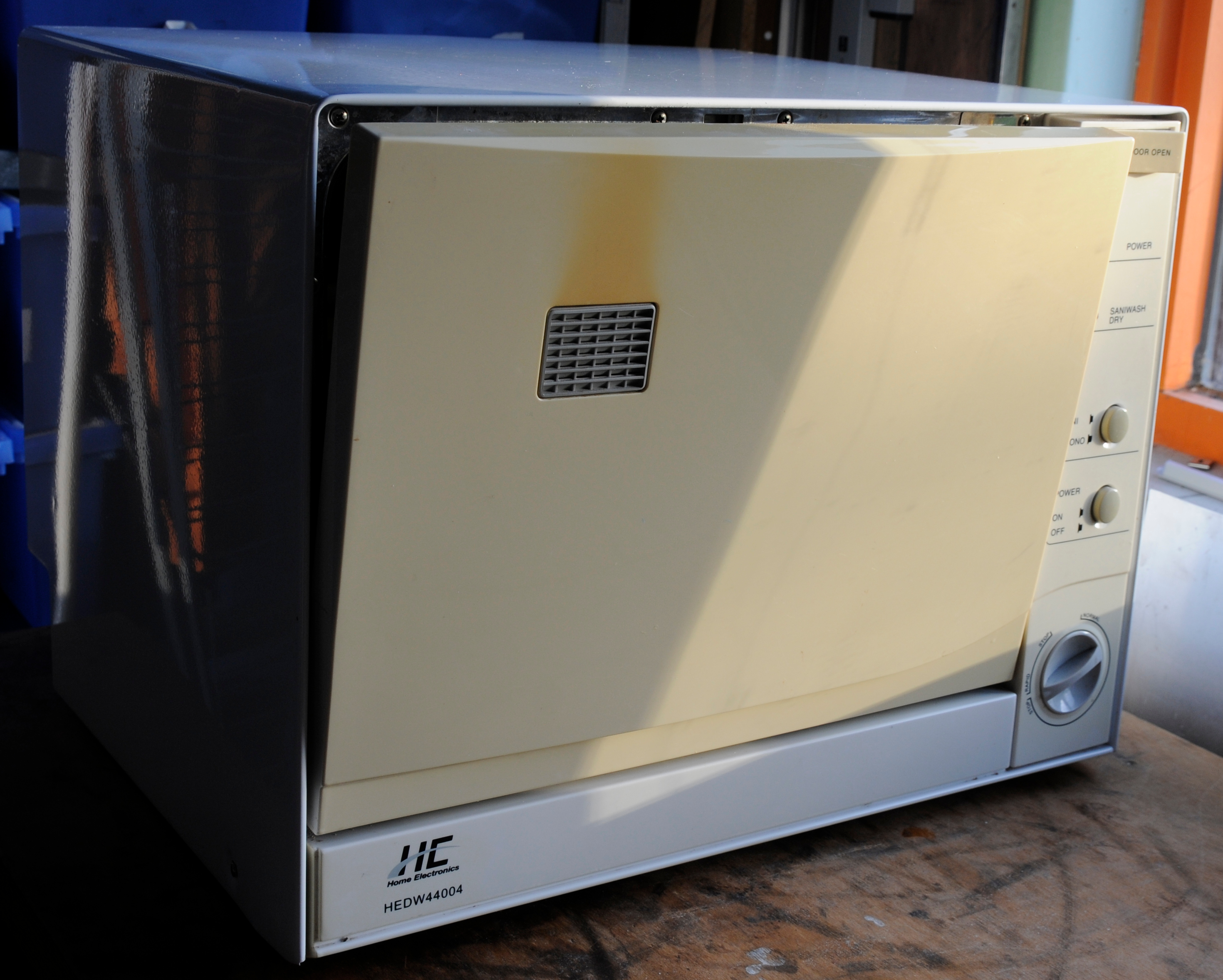 HEDW44004 enjoying the afternoon sun
Brain Upgrade
Unwilling to toss my faithful old household robot just because it’s brain happened to be stuck, I decided to create a new one for it. With mechanical brains not being fashionable anymore and positronic ones still firmly in the realm science fiction, I opted for an electronic replacement. I also happen to know a bit more about the latter.
With my junk box full of parts waiting for a new life and me liking to reuse and repair things whenever possible, the replacement brain was to be built mostly from scrap parts. With some exceptions:
- I don’t reuse electrolytic capacitors because they age rather severely.
- Since I don’t have equipment to etch my own circuit boards, the board was made by a fabricator.
- I didn’t have any microcontrollers in my junk parts collection, so that’s brand new as well.
Otherwise, the bill of materials consists entirely of salvaged parts.
I set some requirements for the new brain. It had to:
- Open and close the water inlet valve.
- Turn on or off the heater element.
- Turn on or off the pump.
- Run the pump forwards or backwards.
- Read the (mechanical) float switch.
- Read the temperature switch.
- Detect whether the door is open or closed.
- Disable all actuators when the door opens.
- Signal the user via an LED.
- Read a button to start the program.
Also, as a nice to have I wanted a small speaker to play PCM sounds for a bit of that nineteen-eighties coolness but I dropped that feature in the end.
The diagram below shows the functional design that I ended up with.
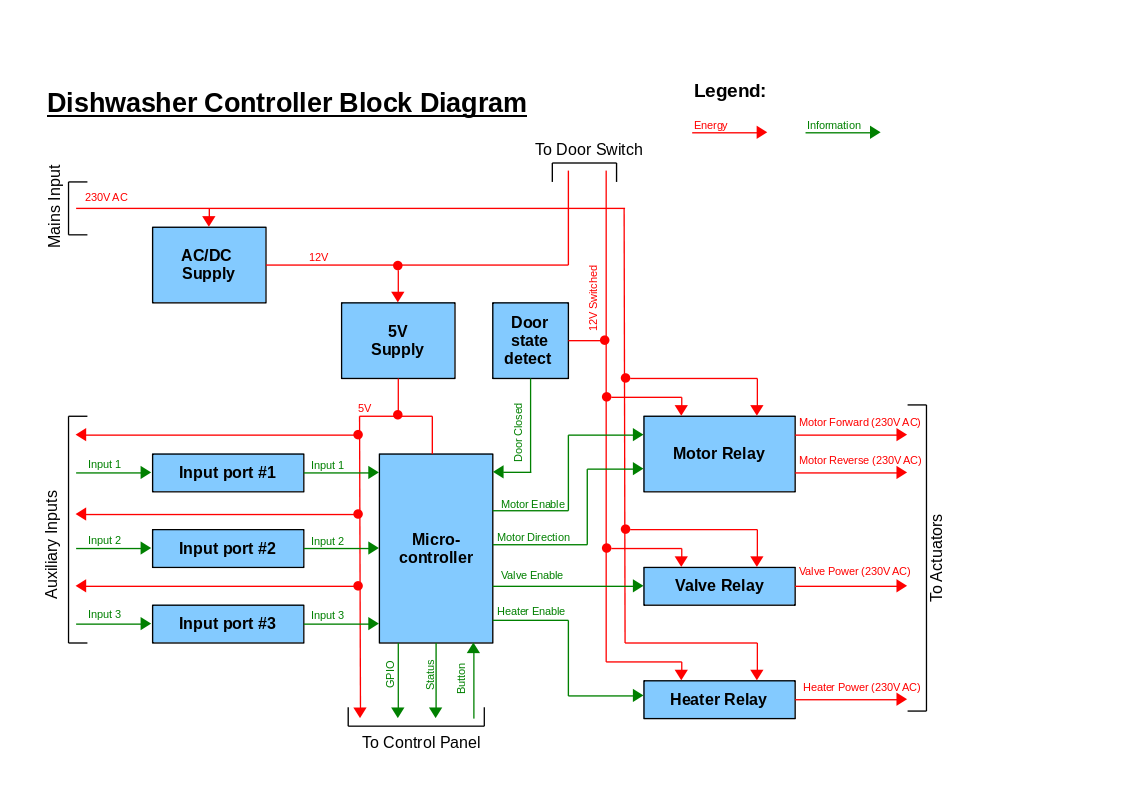 Block diagram
Five Years
As mentioned in the above, it took five years to finalize this repair job. You would be forgiven to ask: how on earth can it take someone five years to fix a simple dishwasher? Indeed, it took me long enough. The hardware was quite simple and easy to build. The firmware on the other hand… Should have been just as easy be it not that I exercised my finely honed skill of making things overly complicated. I tried to code a controller that would fulfill my wildest washing dreams… And failed…
I once, for instance, spent two whole days debugging a piece of code that would enable the controller to generate the PCM tones I fancied so much. That was before having completed core features of the firmware, like actually washing dishes.
Eventually I gave up on the firmware and my dishwasher sat forgotten in the shop, wasting precious space. Meanwhile I wore out a pair of cleaning gloves every few months and annoyed myself with another tedious household chore to keep up with. Until that one day when I decided that I’d had enough. I swallowed my pride and accepted that I would not get those fancy features or even proper firmware. The microcontroller I picked wasn’t powerful enough to meet my demands anyway.
Next: Board Design!
The next post covers the design of the controller board. In that post I dive deeper into the technical details of this repair job.
-
Technology Connections: Detergent packs are kinda wishy-washy (Dishwashers Explained) ↩︎